Beehives as Architecture: Snøhetta’s Rooftop Hives, Kew’s The Hive, and a Concept That Never Shipped
Most beehives are plain boxes for good reasons. They’re cheap and standard, and the bees don’t care what they look like. Now and then, though, an architect or artist takes on the beehive, and the results are worth a look.
Below are three well-known examples: a working hive on an Oslo rooftop, a 17-meter sculpture driven by a real colony, and a design concept that, as far as I can find, was never sold. I’ve kept to what the designers and the places that host these projects actually say.
- Snøhetta’s Vulkan Beehives
- The Hive at Kew Gardens
- Philips’ Urban Beehive
- Rooftop and city hives
- What these projects get right
The short answer
- Snøhetta’s Vulkan Beehives (Oslo, 2014) are real, working hives. The striking part is the outer shell. Inside are traditional hive boxes.
- The Hive at Kew Gardens (London) is a giant sculpture with no bees inside. Its lights and sound respond to vibrations from a real colony living elsewhere at Kew.
- Philips’ Urban Beehive (2011) was a wall-mounted glass hive shown as a design concept. I found no evidence it was ever produced.
Snøhetta’s Vulkan Beehives, Oslo
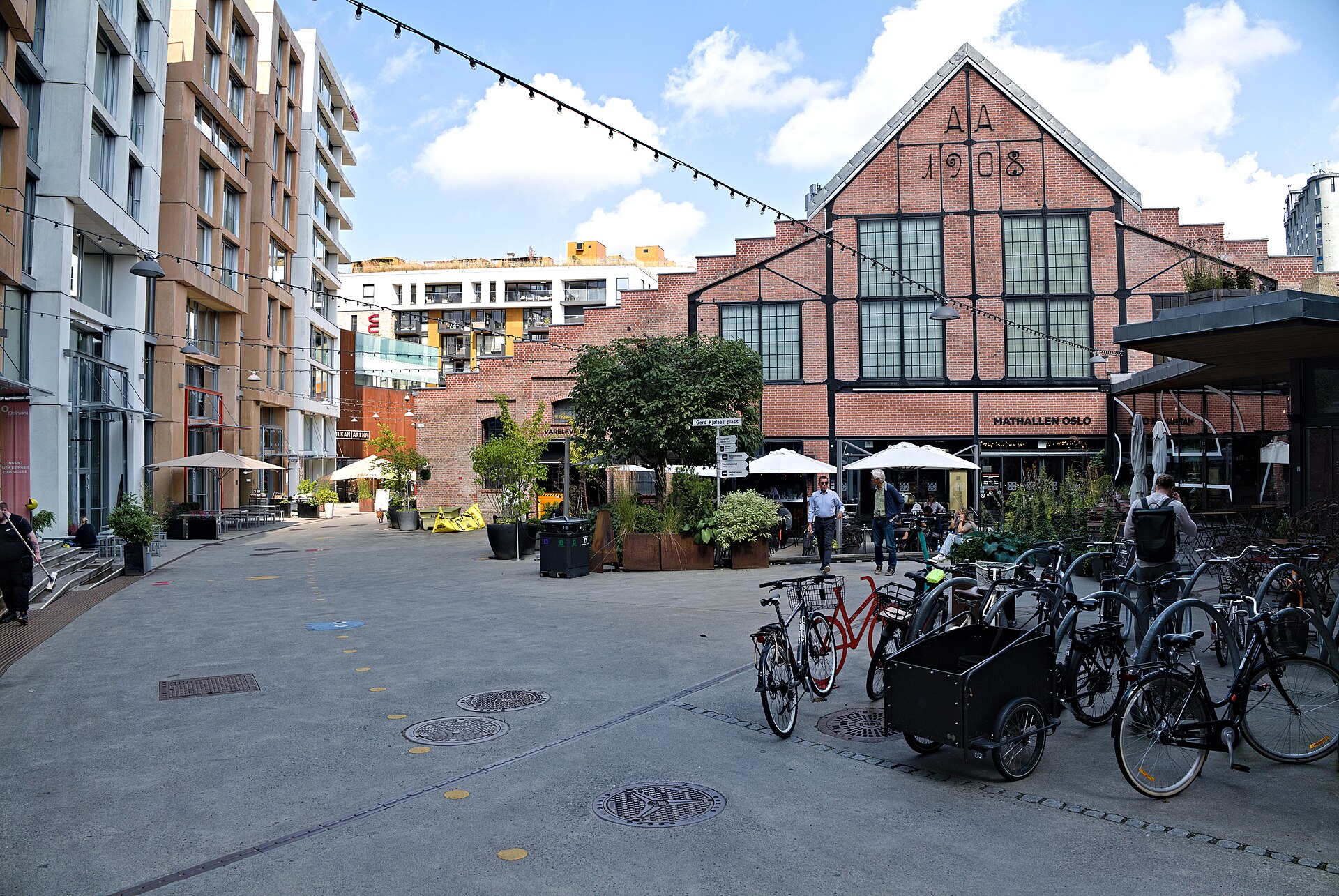
Snøhetta is the Norwegian firm behind buildings like the Oslo Opera House. In 2014, it began working with apiarist Alexander Du Rietz, who wanted to take his beekeeping into the city. The project was built for the Vulkan area beside Oslo’s Akerselva river, a former industrial district now home to a food hall called Mathallen.
According to Snøhetta:
- The hives are a pair of hexagonal towers made of birch plywood, lacquered a warm honey color and marked with a honeycomb pattern.
- The shells enclose traditional beehive boxes, plus monitoring equipment that tracks rainfall, temperature, and honey production.
- They sit on the roof between Mathallen and the dance center Dansens Hus. The firm says the sculptural shape was meant to catch the attention of people in the plaza below and get them talking.
- The two hives hold about 160,000 bees and two queens. One queen is named Sonja, after Norway’s queen. An on-site urban beekeeper looks after them every day, and some of the honey is sold in the shops below.
Snøhetta jokingly calls it the firm’s “densest housing project to date.” I couldn’t find a photo of the hives I’m allowed to use, but Snøhetta has a set on its Vulkan Beehives project page if you want to see them up close.
For beekeepers, the clever bit is that the design is a shell over standard equipment. The bees live in ordinary boxes, and the beekeeper can still work them the normal way. If you ever want a decorative hive, that’s the model to copy: dress up the outside, and keep the inside standard.
The Hive at Kew Gardens, London
The Hive was designed by UK artist Wolfgang Buttress for the UK Pavilion at the 2015 Milan Expo. Afterward it was rebuilt at the Royal Botanic Gardens, Kew, in a wildflower meadow. Kew says it took four months to rebuild and won a Landscape Institute Award in 2016.
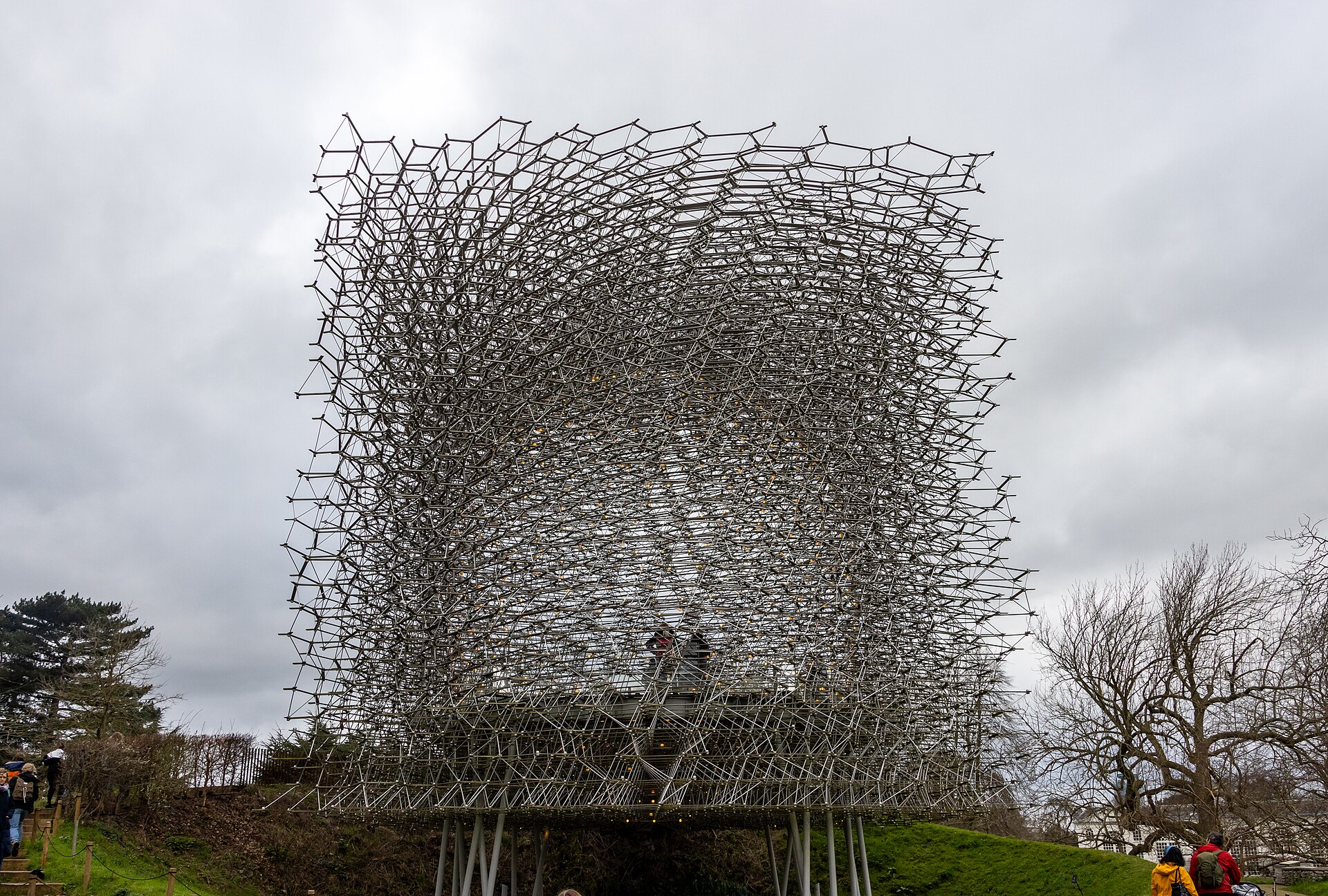
The numbers, per Kew:
- 17 meters tall
- Built from 170,000 aluminium parts
- Lit by 1,000 LED lights
Buttress’s project notes say accelerometers (vibration sensors) in a real bee colony at Kew send live signals to the LED lights inside the sculpture. Algorithms turn the colony’s vibrations into changing light patterns, and a soundscape built from recorded bee sounds and music plays alongside. Visitors can walk into a hollow at the center and look up through a glass floor.
The bee science behind it came from Dr. Martin Bencsik, a physicist at Nottingham Trent University. His team’s research has also shown that comb vibrations can warn of a swarm weeks ahead. (I cover that research in Robotic Beehives and Hive Sensors.)
No bees live in The Hive itself. The sculpture is wired to a real colony elsewhere at Kew. It’s still one of the best examples of the technology from the “future” side of this site being used to help people feel what goes on inside a colony.
Learn more: Royal Botanic Gardens, Kew: The Hive
Philips’ Urban Beehive (concept, 2011)
In 2011, Philips Design showed a set of concept products called the Microbial Home at Dutch Design Week in Eindhoven, the Netherlands. One of them was the Urban Beehive. Philips Design’s own project notes describe it this way:
- It came in two parts. On the outside was a flowerpot and an entry passage for the bees.
- On the inside was a glass vessel holding frames with a honeycomb texture for the bees to build their wax cells on.
- The glass was tinted to let through orange light, picked with the bees’ eyesight in mind.
Philips said plainly that the Microbial Home was a far-future concept and would not be sold as a Philips product. I couldn’t find any sign that changed, so treat it as a design idea, not a product you missed.
It’s a lovely idea. As a working hive, though, it leaves the questions any beekeeper would ask unanswered in the published descriptions: how you’d pull frames for a proper inspection, manage swarming, or treat for mites, all on the inside of your house. Plenty of beautiful hive concepts stall right there.
Learn more: Philips Design’s Microbial Home project text
A note on rooftop and city hives
Beautiful rooftop hives can make it look like more hives in the city is always good for bees. Research from Switzerland suggests otherwise. Scientists at the Swiss Federal Research Institute WSL looked at 14 Swiss cities and found the number of hives nearly doubled between 2012 and 2018, from 3,139 to 6,370. In most of those cities, their model found there weren’t enough flowers to feed all those honey bees. The WSL researchers warn this can put pressure on wild bees competing for the same flowers. They cite a British estimate of 7.5 hives per square kilometer of green space as a sustainable limit.
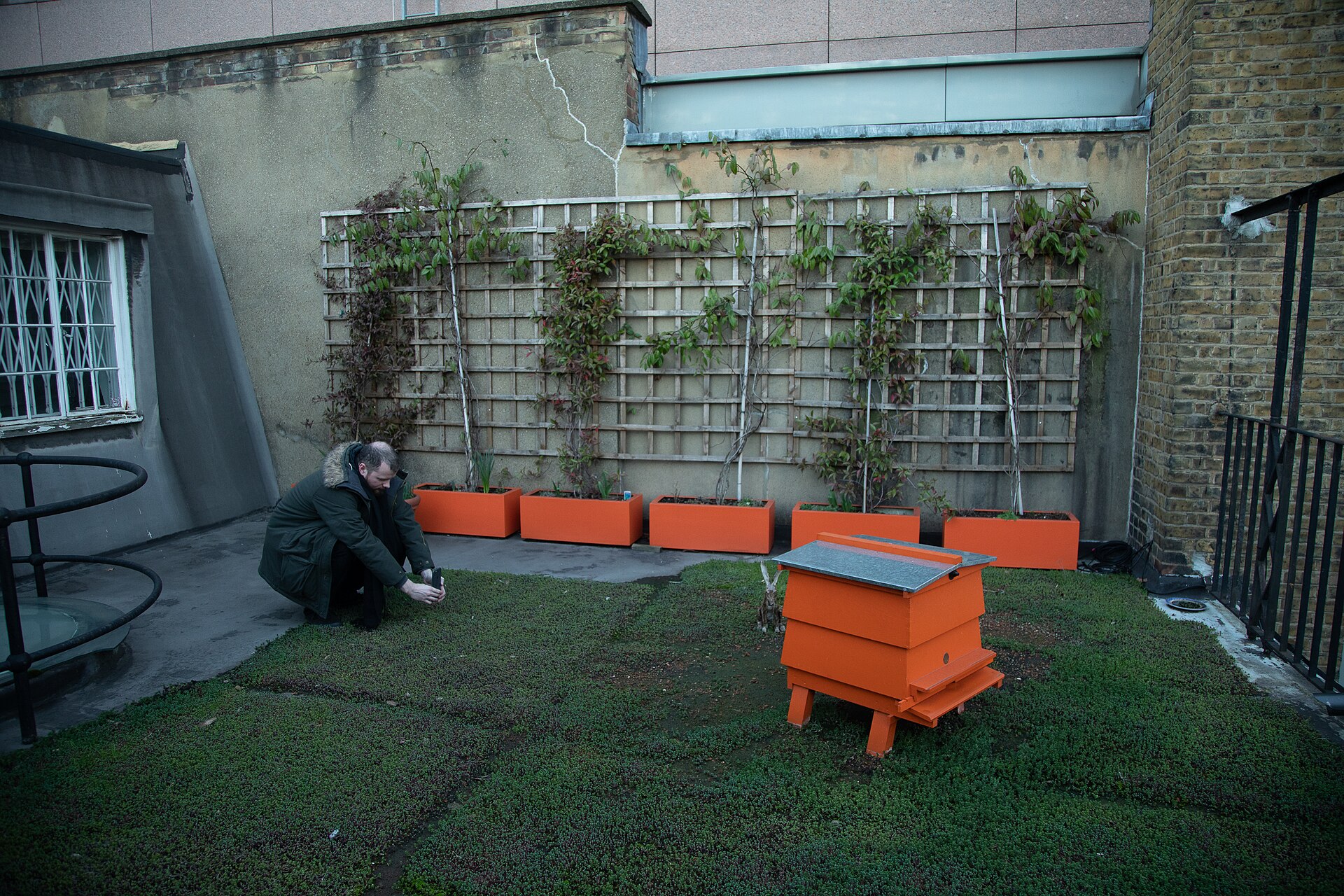
If you’re dreaming of a rooftop hive, check what’s blooming within flying distance before you add another colony.
Learn more: The 2022 Swiss study on city beekeeping in npj Urban Sustainability (free to read)
What these projects get right
- The bees’ needs come first. Snøhetta’s shells hold standard boxes, and The Hive borrows signals from a real colony instead of housing one.
- They get people curious. Each one makes passersby stop and ask questions about bees.
- The concept-only designs show the hard part. Getting a hive to look good is easy. Making it easy to inspect and manage is the real design problem.
Sources
- Snøhetta, “Vulkan Beehives”
- Royal Botanic Gardens, Kew, “The Hive”
- Wolfgang Buttress, “The Hive at Kew: project details”
- Philips Design, “Microbial Home Probe” project text (via Materiability)
- WSL, “Beekeeping in cities may harm wild bees and honeybees” (Feb 14, 2022)
- Casanelles-Abella & Moretti, “Challenging the sustainability of urban beekeeping using evidence from Swiss cities,” npj Urban Sustainability (2022)
Top photo: the Vulkan district in Oslo, home of the Mathallen food hall. Photo: Leonhard Lenz, CC0, via Wikimedia Commons