Robotic Beehives and Hive Sensors: What the Tech Can (and Can’t) Do for Bees
Most beekeepers still keep bees in a wooden box built on an idea patented in 1852. Meanwhile, startups are putting robot arms, cameras, scales, and microphones into hives and training AI to read what they pick up.
Some of this is real and working. Some of it is still in the lab. I’ve sorted it out below, with sources, so you can tell the difference.
- The robotic hive: Beewise BeeHome
- Hive scales and in-hive sensors
- Listening to the hive
- Why the tech push
The short answer
- Robotic hives exist. The Beewise BeeHome pulls frames with a robot arm, photographs them, and can feed colonies and treat mites without a person opening the box. It’s built for commercial pollination, not backyards.
- Hive scales and temperature sensors are the most practical tech today. They tell you about nectar flows, food use, and sudden changes. They can’t see eggs, mites, or disease.
- “AI that listens to bees” is real research. A 2020 study predicted swarms days to weeks ahead using vibration sensors in the comb. It’s promising, but it isn’t something you can buy and trust yet.
- None of it replaces an inspection or a mite count.
The robotic hive: Beewise BeeHome
Beewise started in 2018, when co-founder Eliyah Radzyner wanted a way for commercial beekeepers to care for colonies remotely. The company’s own history goes like this:
- 2020: the first BeeHome, built inside a 20-foot shipping container, held up to 40 hives. Only a few were made.
- Second generation: smaller units holding up to 48 colonies, with hundreds placed in California almond orchards.
- Early 2023: the BeeHome 4. It holds up to 10 hives, uses standard wooden Langstroth frames, and can be moved with an ordinary forklift.
Inside, a robotic arm lifts frames into view of cameras. Computer vision looks for problems such as hungry colonies, mites, or signs of pesticide exposure. Beewise’s FAQ says the arm shakes adult bees off a frame before inspecting it, so they stay in their hive. The unit can fill a feeder frame on command, heat or cool the enclosure, and close the entrances and alert the beekeeper during a pesticide event. Mites get a heat treatment: frames go into a chamber that, the company says, eliminates 99% of Varroa mites without chemicals.
By June 2025, Beewise said 1,240 BeeHomes were in operation and that it had raised nearly $170 million.
A caution on those numbers: the 99% mite figure and the survival claims come from Beewise. I didn’t find independent, peer-reviewed field results comparing BeeHome colonies with conventional hives.
So yes, robotic hives are real machines doing real work in orchards. They’re a commercial pollination tool, and the evidence that they keep bees alive better than good beekeeping is mostly the company’s own so far.
Learn more: Beewise, “The BeeHome Through the Years” (the company’s own history)
Hive scales and in-hive sensors
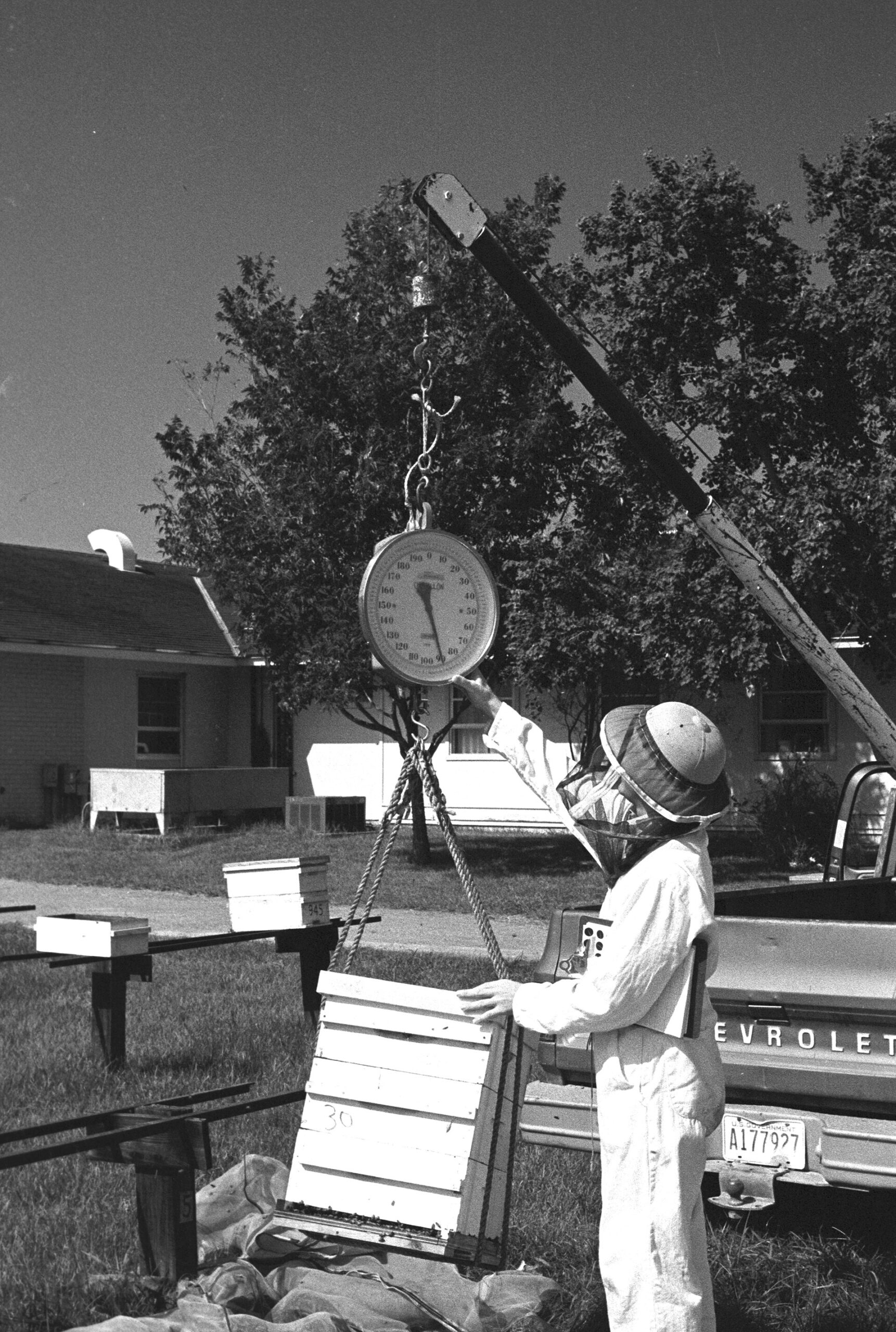
This is the part of hive tech a hobbyist might actually use. Researchers have used electronic scales on hives for decades. A 1990 paper described the “electronic scale honey bee colony” as a research tool, and the idea has been refined ever since.
What the numbers can tell you:
- Weight: whether a nectar flow is on, how fast the bees eat their stores in winter, and when a big drop says something happened (a swarm, a robbing event, or a harvest).
- Temperature: a steady, warm brood nest generally means brood is being raised. Long cold stretches can mean trouble.
- Humidity: useful context in winter, when moisture inside the hive matters.
BroodMinder is one maker of hobby-level sensors (a scale plus temperature and humidity sensors). It also runs a citizen-science project, BeeCounted.org, where beekeepers can share their hive data into a public database so people can compare “normal” hive conditions by region.
The limits matter just as much. In their 2020 paper, the Nottingham Trent University team points out that a scale only tells you a colony swarmed after it’s gone, and earlier work found that temperature changes showed up only minutes before a swarm. Neither one can tell you whether there are eggs, how many mites there are, or whether brood is sick.
Learn more: BroodMinder’s citizen-science project
Listening to the hive: AI and vibration sensors
Beekeepers have long claimed they can hear when something’s off. Aristotle wrote about a peculiar sound before a swarm. In 1959, a researcher named Woods published a paper in Nature on electronically predicting swarms from a hive “warble” around 250 Hz.
The most rigorous modern work I found is a 2020 Scientific Reports paper from Nottingham Trent University (UK) and France’s INRAE, led by physicist Martin Bencsik. The team put accelerometers (vibration sensors) into the wax of brood comb in 25 hives and recorded them through the 2014 and 2015 seasons. Their results:
- One method raised a swarm alarm before the primary swarm in 15 of 18 swarming datasets, on average 22 days ahead, with no false alarms from colonies that didn’t swarm. But it only worked when limited to swarm season.
- A second method that tracked 10 days of change worked year-round. It correctly classified 80% of colonies, with about 10 days’ warning.
- Much of the useful signal was around 20 Hz, too low for ordinary microphones to pick up. The authors argue that’s a reason to use accelerometers rather than microphones.
- They also found that opening hives during queen rearing disrupted the queens’ piping signals. That’s a reminder that inspections themselves change what goes on inside.
Other studies have used microphones and machine learning to spot queenless colonies. The Nottingham paper notes that earlier work like this was only ever tested on a small number of colonies. That’s the general catch with AI in bee research: a model that works on the hives it was trained on may not work on yours.
If you love gadgets, a hive scale is the most useful sensor for a beginner, especially for checking winter stores without opening the hive. It’s optional. A notebook, regular inspections, and mite counts will do more for your bees than any sensor. My guides to your first hive inspection and fall feeding and winter prep cover the basics.
Learn more: The full 2020 swarm-prediction study in Scientific Reports (free to read)
Why the tech push, and why it isn’t the whole answer
The interest makes sense. The U.S. Beekeeping Survey (Auburn University, the Apiary Inspectors of America, and Oregon State) estimated record managed-colony losses of 55.6% for April 2024 to April 2025. Losses for April 2025 to April 2026 dropped to 39.9%, still high. In that latest survey, backyard beekeepers with fewer than 50 colonies lost a bigger share than commercial operations.

Robots and sensors may help big operations stretched across hundreds of miles. For a backyard beekeeper, the biggest wins are still low-tech: knowing what a healthy frame looks like, keeping mites in check, and making sure the bees have food going into winter.
Learn more: Auburn University’s 2025 to 2026 U.S. Beekeeping Survey results
Sources
- Beewise, “The BeeHome Through the Years” (Mar 11, 2024)
- Beewise FAQ
- Beewise Series D press release (June 9, 2025)
- Ramsey, Bencsik et al., “The prediction of swarming in honeybee colonies using vibrational spectra,” Scientific Reports (2020)
- BroodMinder, Citizen Science
- Auburn University, 2024–2025 U.S. Beekeeping Survey results (June 16, 2025)
- Auburn University, 2025–2026 U.S. Beekeeping Survey results (June 24, 2026)
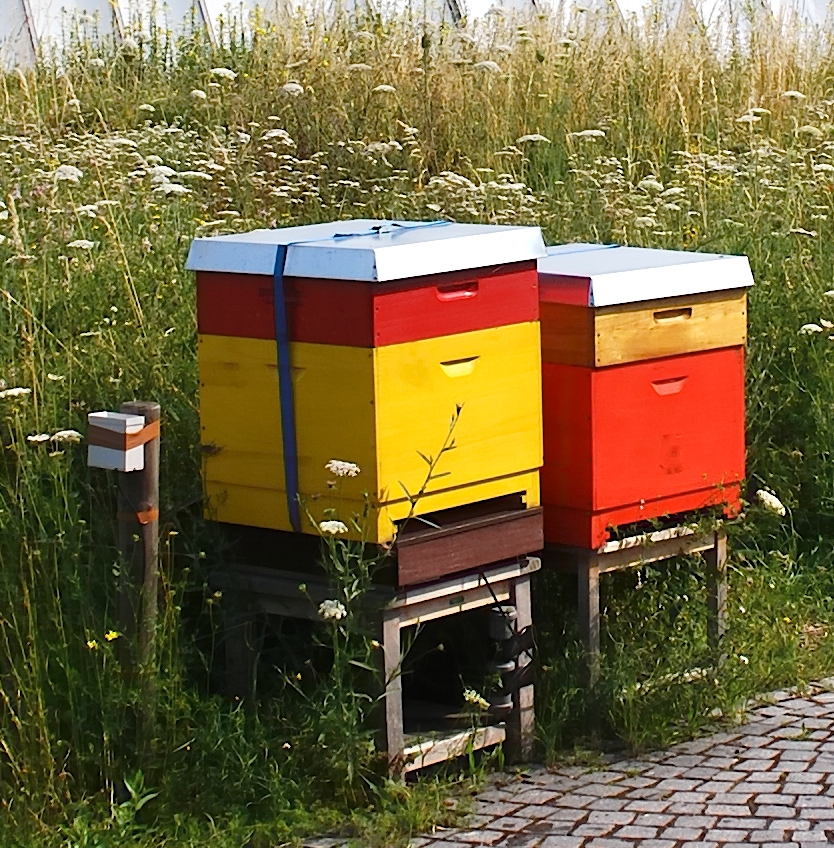
Top photo: hives on a rooftop scale in Bonn. Photo: Jean Housen (cropped by Jocian), CC BY-SA 3.0, via Wikimedia Commons