The Honey Bee Vaccine, New Varroa Science and Sting Allergy: What’s Real in 2026
For most of beekeeping history, the tools for fighting bee disease barely changed. In the past few years, two new kinds of tools reached U.S. beekeepers: a vaccine for a bacterial brood disease and a mite treatment based on RNA. Bee breeders have also built stocks that hold mites back on their own.
Headlines tend to blur these together, or make them sound like cures. They aren’t, and each one does a different job.
- The honey bee vaccine
- Norroa: an RNA treatment for Varroa
- Breeding bees that fight back
- Where that leaves you
- Bee-sting allergy: what’s new for the beekeeper
The short answer
- The vaccine protects against American foulbrood (AFB), a bacterial disease of bee larvae. It doesn’t treat Varroa mites or viruses. It has held a conditional USDA license since December 2022. As of October 2026, the company says full licensure is expected for the 2027 season at the earliest.
- Norroa (active ingredient vadescana) is the first RNA-interference Varroa treatment. The EPA registered it in September 2025. It stops mites from reproducing, so it’s meant to keep mite numbers low. It won’t rescue a hive that’s already overrun.
- Mite-resistant bees (USDA Russian stock, VSH and Pol-line bees) are older than both. They have the strongest long-term field evidence of the three.
- For you, not the bees: allergy shots still prevent most repeat sting reactions, and since 2024 there’s an FDA-approved epinephrine nasal spray (neffy).
- None of this replaces mite monitoring.
The honey bee vaccine
What it is
Dalan Animal Health, a company based at the University of Georgia in Athens, developed the vaccine with UGA researchers. (Its website now uses the name Dalan Biosciences.) The USDA Center for Veterinary Biologics granted a conditional license in December 2022, and Dalan announced it on January 4, 2023. Dalan says this made it the first vaccine ever approved for an insect. Canada’s CFIA has also conditionally licensed it.
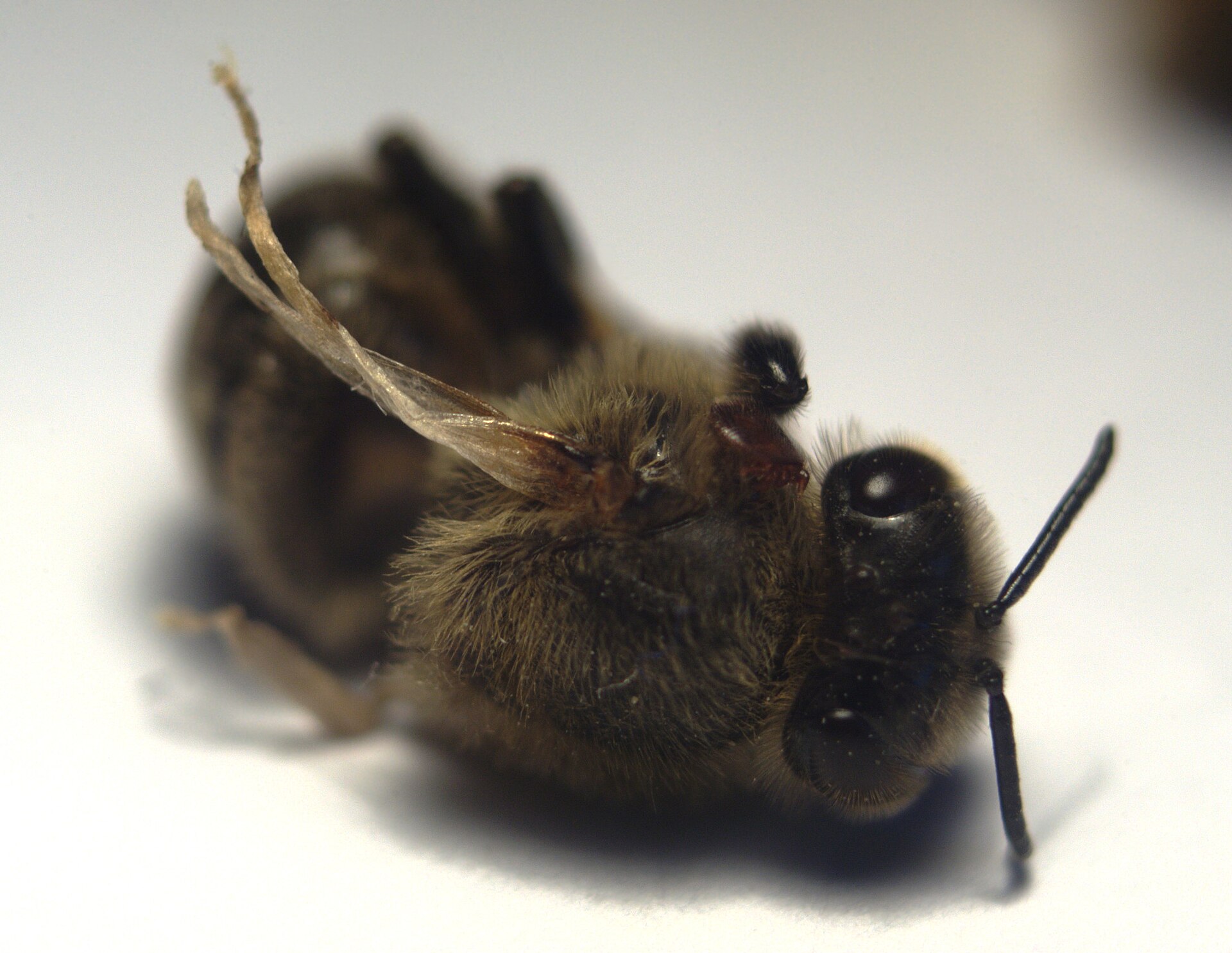
The target is Paenibacillus larvae, the bacterium that causes American foulbrood. AFB kills developing larvae, and cases are notifiable in the U.S. and Canada. Dalan’s announcement noted that the only treatment method relied on burning the bees, hive, and equipment. Penn State Extension says burning the bees and all the equipment is the only sure way to be rid of it, and some states require it.
How do you vaccinate a bee?
You don’t use needles. The vaccine contains killed P. larvae bacteria. It’s mixed into queen candy, the soft sugar paste queens eat while being shipped. Worker bees eat it and work it into the royal jelly they feed the queen. Fragments end up in her ovaries, and her larvae hatch already “primed” against the disease. Scientists call this transgenerational immune priming. Dalan’s FAQ says the vaccine contains no mRNA, is non-GMO, and is suitable for organic agriculture.
Where it stands now
In November 2025, Dalan announced that it had finished the efficacy trials required to move from a conditional to a full license and planned to send the data to USDA. CEO Annette Kleiser said they still had work to do and expected full licensure “for the 2027 season at the earliest.” In October 2026, Dalan’s site still describes the vaccine as conditionally licensed. You can get it two ways: buy the vaccine directly (Dalan recommends this for beekeepers with 50 or more hives) or buy queens from certified producers who’ve already vaccinated them.
The licensed use is narrow: vaccinating queens “to prime larvae against mortality due to Paenibacillus larvae.” Dalan also mentions customer reports of stronger colonies and an “observed correlation” with lower Deformed Wing Virus. Those are reports and correlations, not the licensed claim. The vaccine doesn’t do anything about Varroa mites, and you still need to inspect brood and report AFB where required.
Learn more: University of Georgia CAES, “Fighting foulbrood”
Norroa: an RNA treatment for Varroa
What it is
On September 25, 2025, the EPA announced its final registration decision for products containing a new active ingredient, vadescana, to control Varroa mites in honey bee hives. The registrant is GreenLight Biosciences of Durham, North Carolina. Norroa is the product’s brand name.
How it works
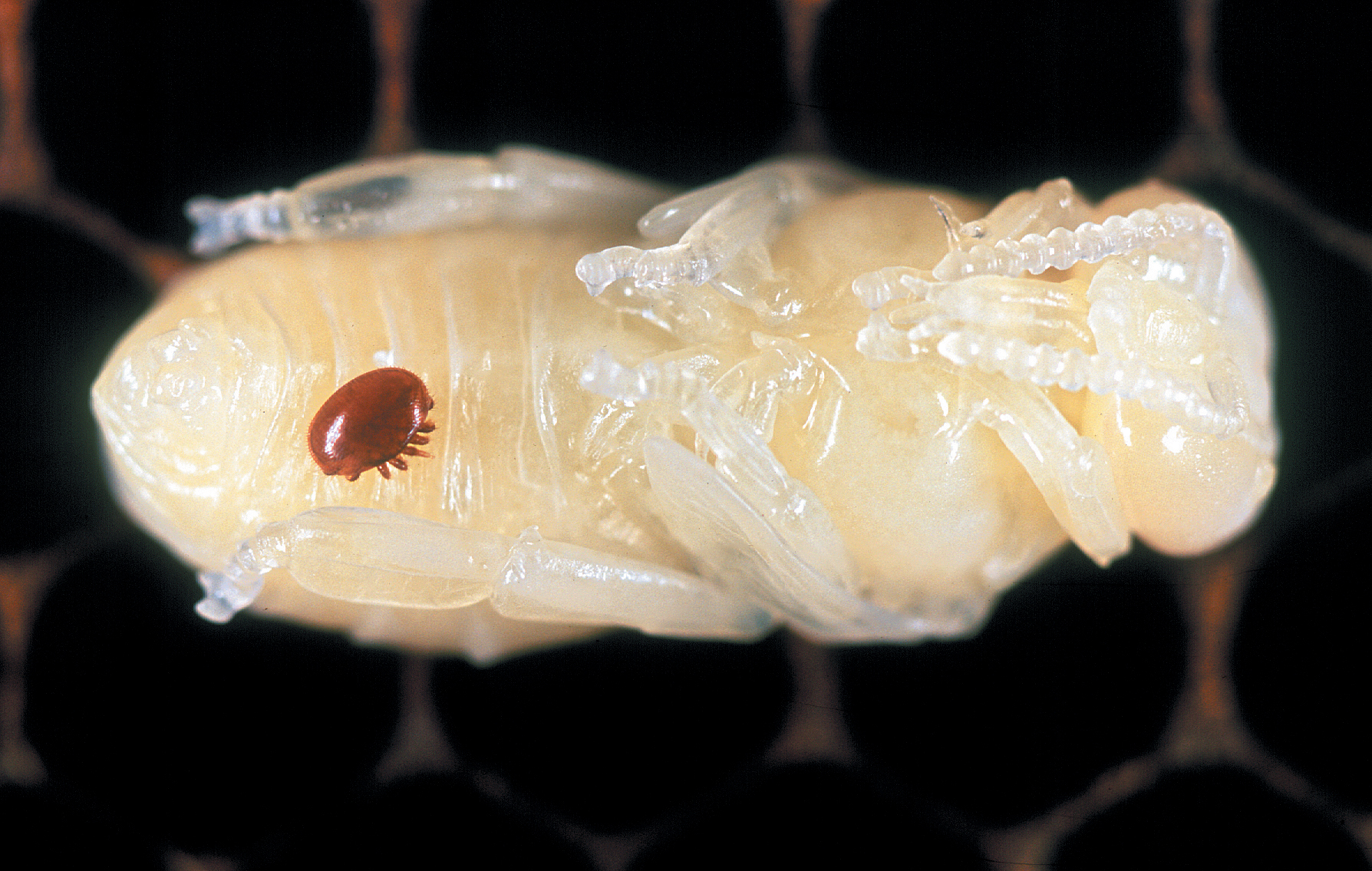
Vadescana is double-stranded RNA. The EPA says it works through RNA interference, blocking the expression of a specific gene that the Varroa mite needs. The EPA also says it’s highly specific to Varroa and does not affect humans or other non-target organisms, including bees. The agency set a permanent exemption from residue limits after finding it poses no risk to human health. The EPA’s Varroa page also explains how this differs from the mRNA technology used in some vaccines.
Delivery is low-tech. According to the maker, the RNA comes in a sugar-syrup pouch with small holes that sits in the hive. Worker bees take the syrup and pass it on in the brood food they feed larvae. Mites reproducing in those brood cells are exposed through that food, and it stops them from producing offspring. The maker’s dosing is two pouches per brood box.
GreenLight says that in its field trials Norroa kept mites under 3 per 100 bees for up to 18 weeks, with up to 75% winter survival. Those are the company’s trial results, not independent studies. It also works only on mites reproducing in brood, and GreenLight itself recommends applying it when mite levels are low. If your mite count is already high, this isn’t the quick fix.
Learn more: EPA’s announcement of the vadescana (Norroa) registration
Breeding bees that fight back
The least flashy approach may have the best long-term evidence.
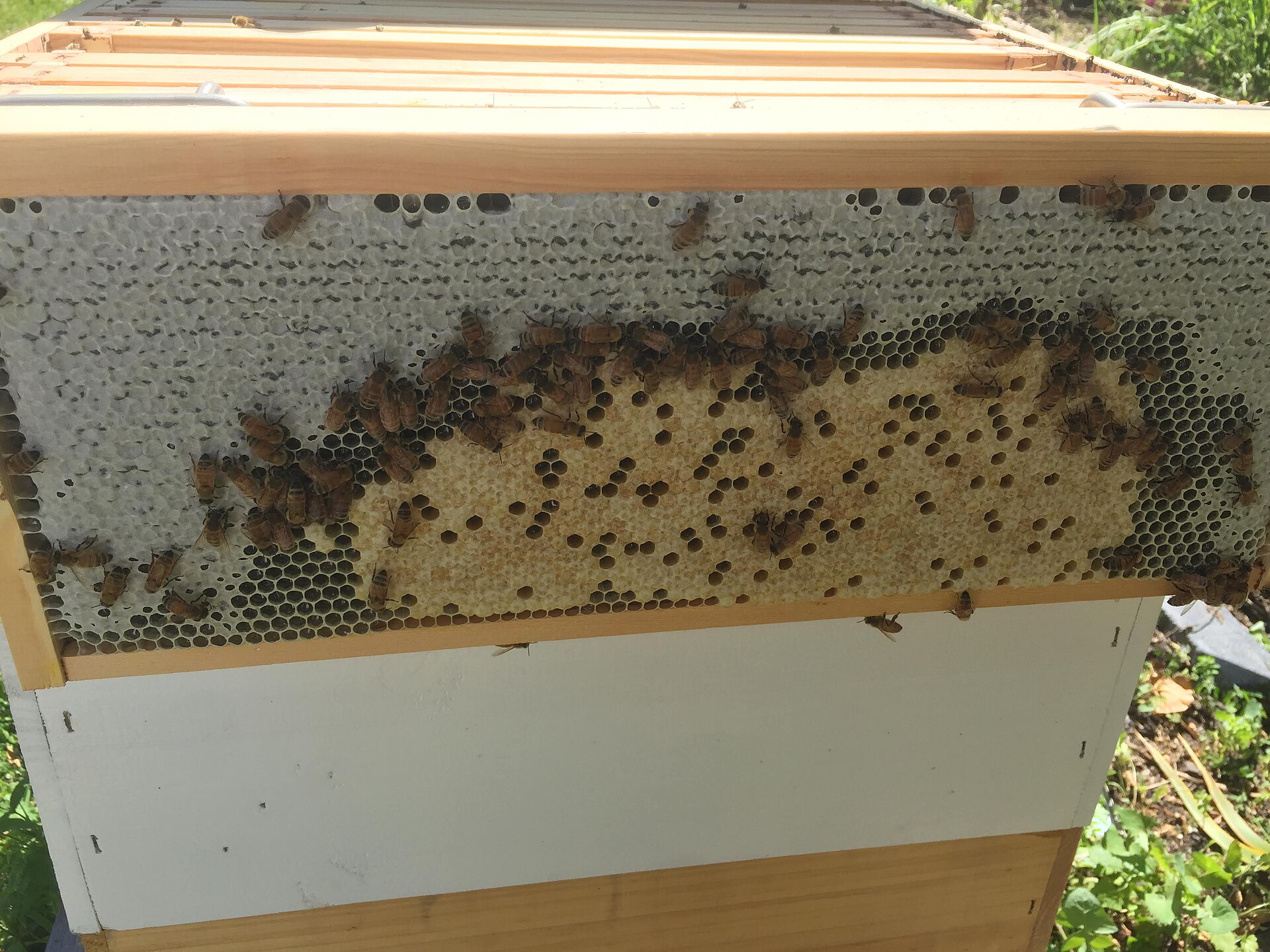
- Russian honey bees. In 1997, the USDA Agricultural Research Service (ARS) imported 100 queens from Russia’s Primorsky region, after a field study there pointed to mite resistance in local honey bees. ARS says released stock showed resistance strong enough that beekeepers “should be able to use half as many treatments,” while warning that the bees “are not immune.” Breeding was later handed to the Russian Honey Bee Breeders Association.
- VSH and Pol-line bees. Varroa Sensitive Hygiene (VSH) is a trait where worker bees find and remove mite-infested brood. From 2008 to 2014, ARS researchers crossed VSH queens with commercial stocks and selected for low mite levels and good beekeeping traits. That produced “Pol-line” bees.
- The evidence: A 2022 Scientific Reports study followed 366 colonies in a migratory commercial pollination operation across three climate regions. Pol-line colonies had markedly lower Varroa levels, lower levels of three major viruses, and the same productivity as a standard commercial stock. Their survival was more than double, comparable to what chemical mite treatment achieved.
For a first-year beekeeper, mites are still the main problem, and monitoring is still your job. Learn to do a mite count and check regularly. When you order bees, it’s fair to ask your supplier what stock they sell and whether it was selected for mite resistance. My fall feeding and winter prep guide covers mite checks before winter.
Learn more: USDA ARS on the release of Russian honey bees
Where that leaves you
A foulbrood vaccine, an RNA mite treatment, and mite-resistant bees go after different problems. Beekeepers have more options than they did five years ago, but none of these fixes everything. The 2022 Pol-line study calls Varroa “the greatest extraneous threat” to managed honey bee colonies worldwide, so the beekeepers who do best are still the ones who check their mite levels and act on what they find.
Bee-sting allergy: what’s new for the beekeeper
Everything above is about the bees’ health. This part is about yours. Stings come with the hobby, and sting-allergy care has changed more in the last few years than most beekeepers realize.
This isn’t medical advice. If a sting has ever caused hives away from the sting site, swelling in your throat, trouble breathing, or dizziness, talk to a board-certified allergist before you open another hive.
Why beekeepers are a special case
Frequent stings cut both ways. The 2016 AAAAI/ACAAI practice parameter says systemic reactions are significantly more common in beekeepers than in the general population. Reported rates vary a lot: a survey of 1,053 German beekeepers found 4.4% reported a systemic reaction to stings, while a 2015 review puts it at up to 32% of beekeepers.
Heavy exposure also seems to build some tolerance. In a Swiss study of allergic patients, beekeepers who had been stung more often had lower skin-test sensitivity and lower venom IgE, plus more venom IgG, which the authors tie to how well those beekeepers tolerated treatment. A later review by the same researcher names fewer than 10 stings a year as a major risk factor for sting allergy in beekeepers, along with a tendency to other allergies and nose or throat symptoms while working the hive. The practice parameter adds that beekeepers often get smaller local swelling when they’re stung often. None of that makes stings safe for someone who’s already allergic.
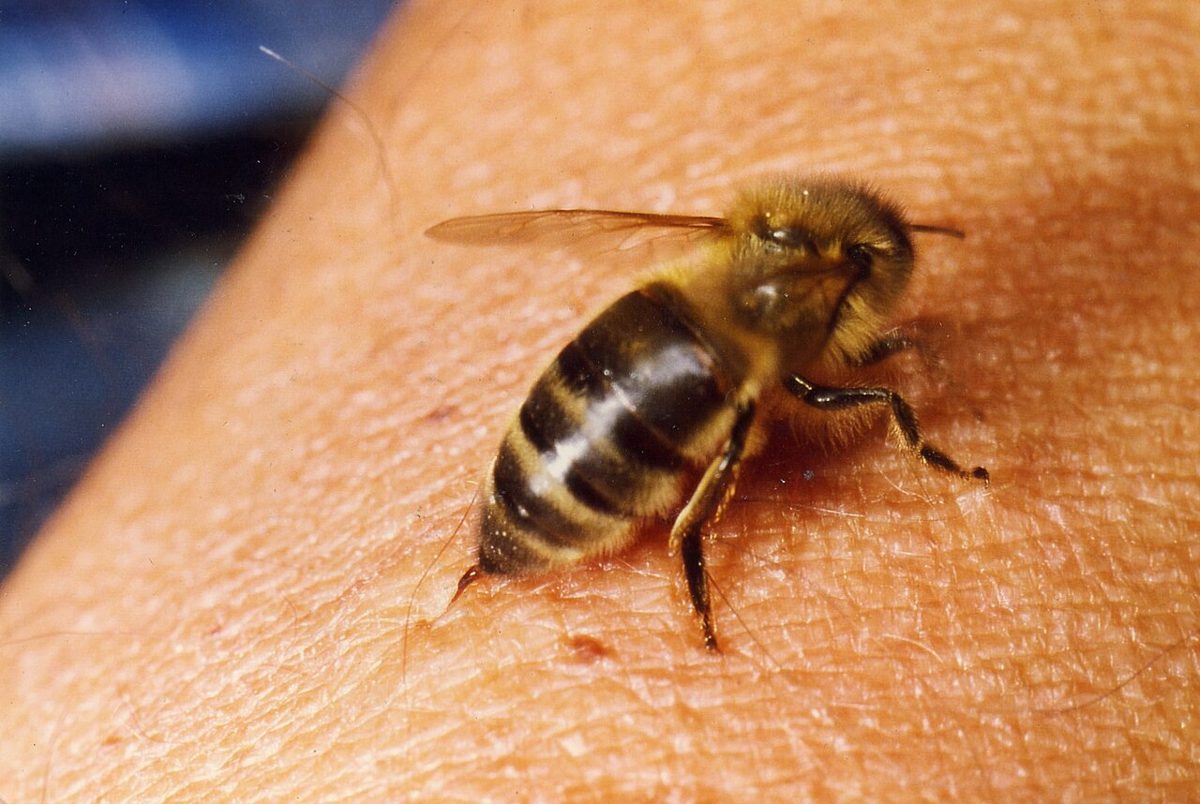
Allergy shots: venom immunotherapy
Venom immunotherapy (VIT) means regular shots of purified venom, starting tiny and building up to a maintenance dose of 100 micrograms, which the practice parameter says must be reached for full protection. A conventional build-up takes about 4 months. Faster schedules get there in 8 weeks or in 2 to 3 days (rush). Ultra-rush packs the build-up into a few hours, though the parameter notes many of those schedules still reach the full dose on day 2. After that, the shots go monthly for 12 to 18 months, then every 6 to 8 weeks. After 4 years, every 12 weeks is safe and effective.
It works well. The practice parameter puts its efficacy at up to 98%, cutting the chance of another systemic reaction to 5% or less, compared with up to 60% without treatment. A Cochrane review, summarized in a 2015 paper, found it cut that risk by about 90%. Honey bee shots are the weaker case, though: under 85% effective versus over 95% for wasp and yellow jacket venom. An AAAAI expert answer cites one study at 77% versus 91%, and notes that honey bee protection doesn’t last as long.
Most people stay on shots for 3 to 5 years. Even with a positive skin test, 80% to 90% won’t have a systemic reaction if they stop after that, and 5 years beats 3. The practice parameter encourages continuing longer, or indefinitely, for people with honey bee allergy or a very severe first reaction, and says to consider more than 5 years for people with frequent exposure. If you’re an allergic beekeeper, both of those apply to you. The good news from the Swiss study: VIT worked as well in beekeepers as in other patients, and the beekeepers tolerated it better. Most of them kept beekeeping while on it.
What’s newer
- Component testing. Standard tests use whole venom. Component tests measure IgE to single recombinant venom proteins (Api m 1, Api m 10 and others) and can help sort true honey bee allergy from cross-reactions with wasp venom. A 2025 review by the chair of the 2016 practice parameter work group says evaluation may now include component testing. A European study found that patients whose IgE was mostly against Api m 10 had about 8 times the odds of honey bee VIT failing, and that some treatment extracts lacked that protein. Other researchers say prospective studies are still needed, and an AAAAI expert wrote in 2023 that the Api m 10 profiling tests weren’t commercially available.
- Rush and ultra-rush starts. The 2025 review says VIT can be safely started with rush regimens. A Frankfurt clinic’s review of 581 rush and ultra-rush starts found no severe (grade 4) reactions. Hives were more common on the ultra-rush schedule (8% vs. 3.1%).
- Omalizumab (Xolair) alongside shots. This anti-IgE drug is FDA-approved for allergic asthma and, since February 2024, food allergy. It isn’t approved for venom allergy. When someone keeps reacting to the shots themselves, pretreatment with omalizumab has been reported to get them to the maintenance dose. The 2025 review describes that use as off-label.
- Under the tongue instead of a needle. In a small Italian trial, 6 months of sublingual honey bee venom shrank large local sting reactions from a median of 20.5 cm to 8.5 cm, with no side effects from the treatment. The authors called it a proof of concept and said trials in people with systemic reactions were still needed. A 2015 review still listed it as a topic for future research.
- Peptide and hypoallergenic vaccines. In 1998, 5 bee-allergic patients got shots of short peptides from the main bee venom allergen instead of whole venom. None had side effects from the shots, and 2 had mild systemic reactions when challenged with a live sting. A 2005 Swiss lab study fused two bee venom allergens into one protein that IgE no longer recognized, and tested it in mice. I couldn’t find either one in use as a treatment today.
Epinephrine you don’t inject
Epinephrine is still the treatment for anaphylaxis. The AAAAI says to use it immediately and call 911. On August 9, 2024, the FDA approved neffy, a nasal spray. It’s the first epinephrine for anaphylaxis that isn’t an injection, for adults and children who weigh at least 30 kg (66 lb). In March 2025, the FDA added a 1 mg dose for children 4 and older who weigh 15 kg to just under 30 kg. If symptoms don’t improve, a second spray goes in the same nostril.
Auto-injectors and manual syringes remain the other first-line options. A sublingual film, Anaphylm, gave blood levels similar to an EpiPen’s in a company-funded Phase 3 study in healthy adults. The FDA turned down the first application in January 2026, citing problems opening the pouch and placing the film in usability testing. The company says the FDA accepted its resubmission and set a decision date of March 16, 2027, so it isn’t available yet. If you carry epinephrine to the bee yard, ask your allergist which form fits you.
Learn more: AAAAI, “Stinging Insect Allergy”
Sources
- Dalan Animal Health / BusinessWire, conditional license announcement (Jan 4, 2023)
- Dalan Animal Health, efficacy trials and licensure timeline (PR Newswire, Nov 4, 2025)
- Dalan, Bee Vaccine page
- Dalan, FAQ
- University of Georgia CAES, “Fighting foulbrood”
- Penn State Extension, “Honey Bee Diseases: American Foulbrood”
- U.S. EPA, “EPA Provides New Tool to Protect Honey Bees” (Sept 25, 2025)
- GreenLight Biosciences, Norroa product page and FAQ
- USDA ARS, Release of USDA-ARS Russian Honey Bees
- USDA ARS, Russian Queen Project Chronology
- “Selection of VSH-derived ‘Pol-line’ honey bees and evaluation of their Varroa-resistance characteristics,” Apidologie
- O’Shea-Wheller et al., “A derived honey bee stock confers resistance to Varroa destructor and associated viral transmission,” Scientific Reports (2022), USDA ARS summary
- Golden et al., “Stinging insect hypersensitivity: A practice parameter update 2016,” AAAAI/ACAAI (PDF)
- Golden, “Update in stinging insect hypersensitivity” (2025), PubMed
- AAAAI, Ask the Expert: “Assessment of venom and honey bee immunotherapy efficacy” (2023)
- AAAAI, “Stinging Insect Allergy”
- Eich-Wanger and Müller, “Bee sting allergy in beekeepers” (1998), PubMed
- Müller, “Bee venom allergy in beekeepers and their family members” (2005), PubMed
- Münstedt et al., “Allergy to bee venom in beekeepers in Germany” (2008), PubMed
- Ludman and Boyle, “Stinging insect allergy: current perspectives on venom immunotherapy” (2015), PubMed
- Frick et al., Api m 10 and honey bee VIT failure (2016), PubMed
- Sturm et al., on the need for prospective Api m 10 studies (2022), PubMed
- Stock et al., safety of 581 rush and ultra-rush VIT starts (2021), PubMed
- Severino et al., sublingual honey bee venom trial (2008), PubMed
- Müller et al., bee venom peptide immunotherapy (1998), PubMed
- Kussebi et al., bee venom allergen fusion protein (2005), PubMed
- FDA, neffy approval (Aug 9, 2024)
- FDA Roundup, neffy 1 mg for children (Mar 7, 2025)
- FDA, Xolair approval for food allergy (Feb 16, 2024)
- NIAID, statement on omalizumab approval (Feb 16, 2024)
- Golden et al., AQST-109 sublingual epinephrine Phase 3 results (2026), PubMed
- Aquestive Therapeutics, Anaphylm Complete Response Letter (Feb 2, 2026)
- Aquestive Therapeutics, Anaphylm resubmission and decision date (Oct 15, 2026)
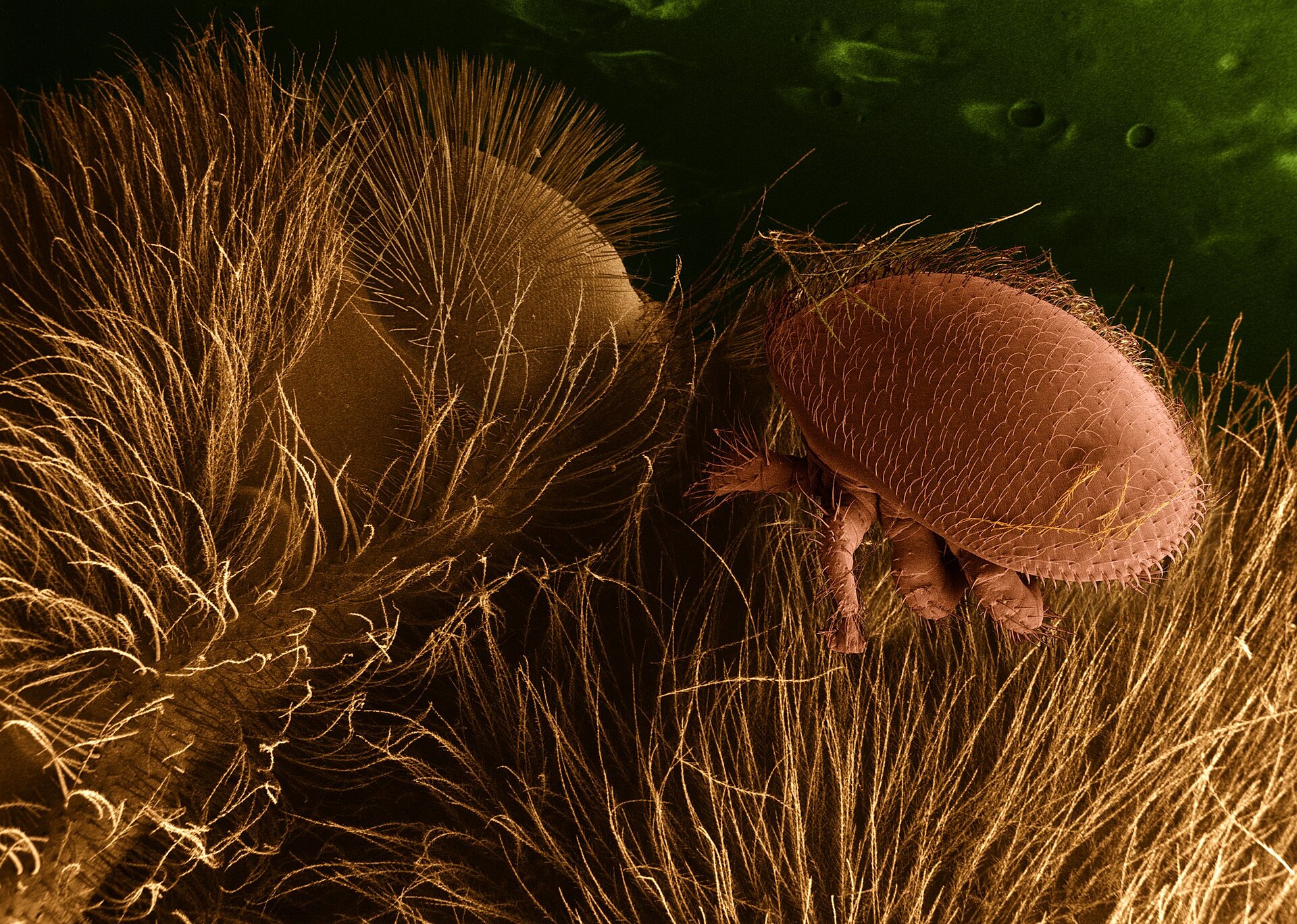
Top photo: a Varroa mite on a honey bee, seen through an electron microscope. Photo: Eric Erbe and Christopher Pooley, USDA ARS, public domain, via Wikimedia Commons