Hives You Can See Into: Observation Hives, the Flow Hive, and the Beehaus
A regular beehive is a closed box. You only see what’s inside when you open it up, and opening it disturbs the bees. A few modern designs set out to change that. Observation hives put the colony behind glass. The Flow Hive lets you drain honey without pulling frames, and the Omlet Beehaus rethought the box itself.
All three are real, and lots of people have used them. They also come with trade-offs the marketing tends to skip.
The short answer
- Observation hives are glass- or plastic-sided hives, usually one to four frames, used in museums, classrooms, and nature centers. They’re wonderful to watch and surprisingly hard to keep alive long-term.
- The Flow Hive changed how honey comes out of the hive. Looking after the bees works the same way, and its makers say you still need to inspect the brood box.
- The Omlet Beehaus was a double-length plastic hive launched in 2009 for city gardens. It drew praise for being easy to work at waist height, along with questions from experienced beekeepers.
Observation hives: a window into the colony
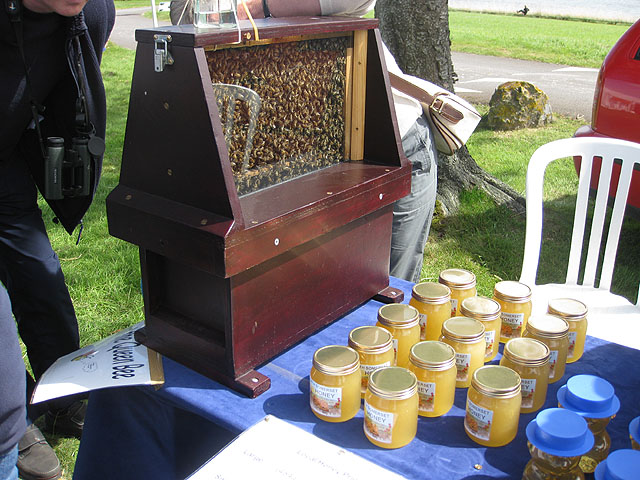
Observation hives are among the oldest teaching tools in beekeeping. University of Florida IFAS Extension calls them “one of the primary research and educational tools in apiculture.” They come in two broad types:
- Temporary: a few frames borrowed from a regular colony for a class or event, then returned.
- Permanent: a larger hive (often four or more frames) with a tube or runway through a wall so the bees can come and go.
What you get to see is the best part: the queen laying, nurse bees tending larvae, pollen coming in, and the famous waggle dance. In the dance, a forager tells her sisters which direction to fly and how far to go.
Why they’re harder than they look
UF/IFAS is blunt about it. The small size that makes an observation hive great for teaching also makes it unstable compared with a full-size colony. Beekeepers who’ve kept them report “a long list of potential problems, including swarming, queenlessness, starvation, and invasion by diseases, pests, and parasites.” The Smithsonian’s National Zoo learned the same lesson. In 2010, it said it had started a new colony in its glass hive every year for several years, “with varied success,” losing colonies to Varroa mites, pesticides, robbing by another bee species, and swarming.
UF/IFAS tips if you’re ever tempted:
- Keep a full-size backup colony, ideally at least 2 miles away, so swapped-in bees don’t fly back to their old home.
- Keep it out of direct sun.
- Keep the entrance tube short and straight. Dead bees pile up at bends.
- Mark the queen so visitors (and you) can find her.
- Check it at least weekly, and keep an eye on food so stores don’t crowd out the queen’s laying space.
- Leave exactly 3/8 inch of bee space around the frame. Any less and bees glue it with propolis. Any more and they build extra comb.
If you’re new to beekeeping, an observation hive is a great second project and a tough first one. Get a regular colony through a season first, then add a glass hive alongside it.
Learn more: UF/IFAS Extension, “Observation Bee Hives”
The Flow Hive: honey on tap
Father and son Stuart and Cedar Anderson, from Byron Bay, Australia, spent about a decade developing the Flow Hive. Their 2015 Indiegogo campaign hit its US$72,000 goal in eight minutes and raised about US$12.2 million in pre-orders over six weeks. IP Australia called it Australia’s most successful crowdfunding campaign to that point. By late 2017, Flow had shipped more than 50,000 hives to over 100 countries, and in 2016 the design won Australia’s Good Design Award.
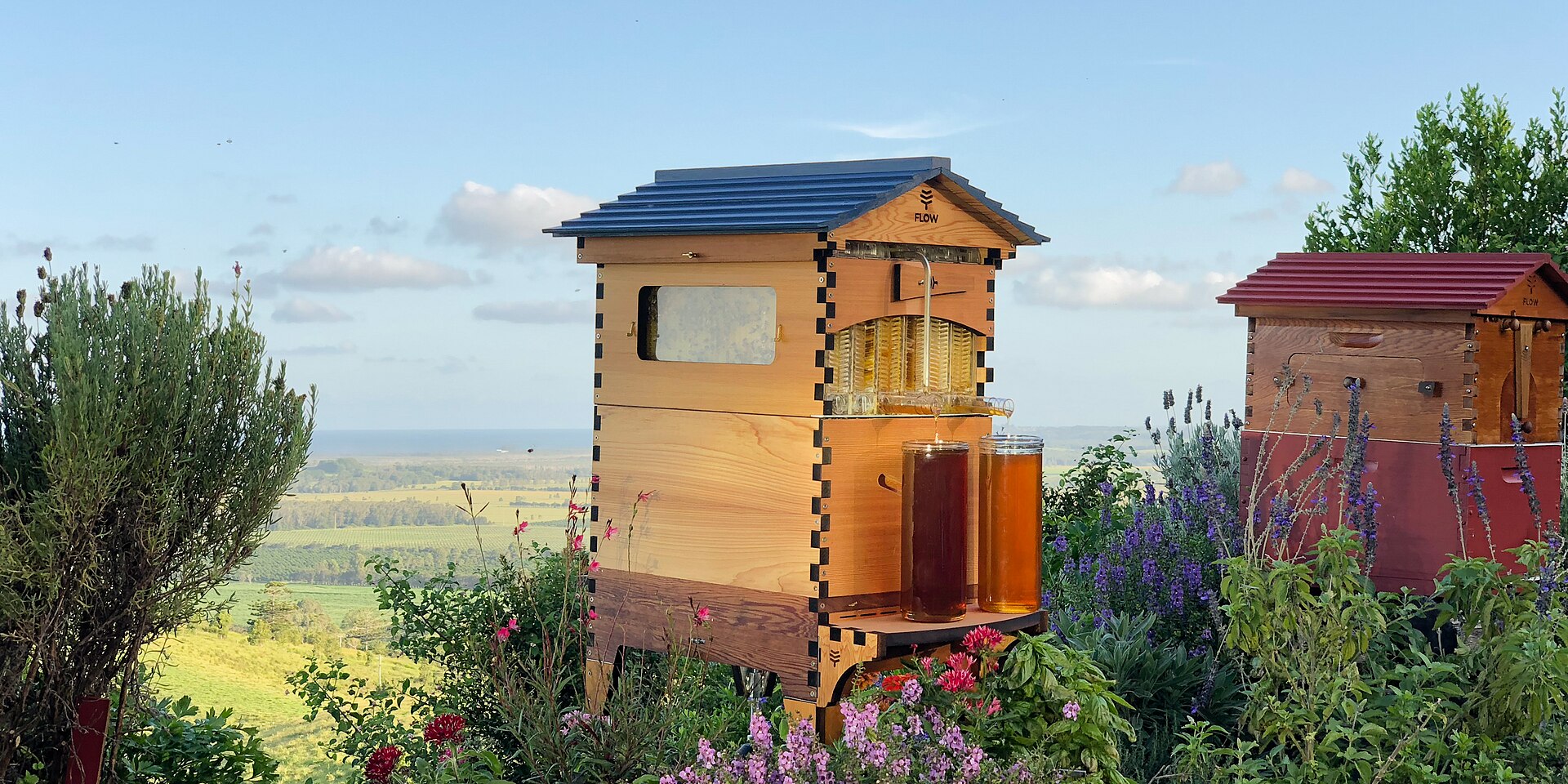
How it works: The honey super holds Flow frames, which are a plastic “honeycomb matrix” that the bees finish with their own wax, fill, and cap. When the cells are full, you turn a key or lever. The cells split, honey drains down channels and out a tube into your jar, and you reset the frame so the bees can fill it again.
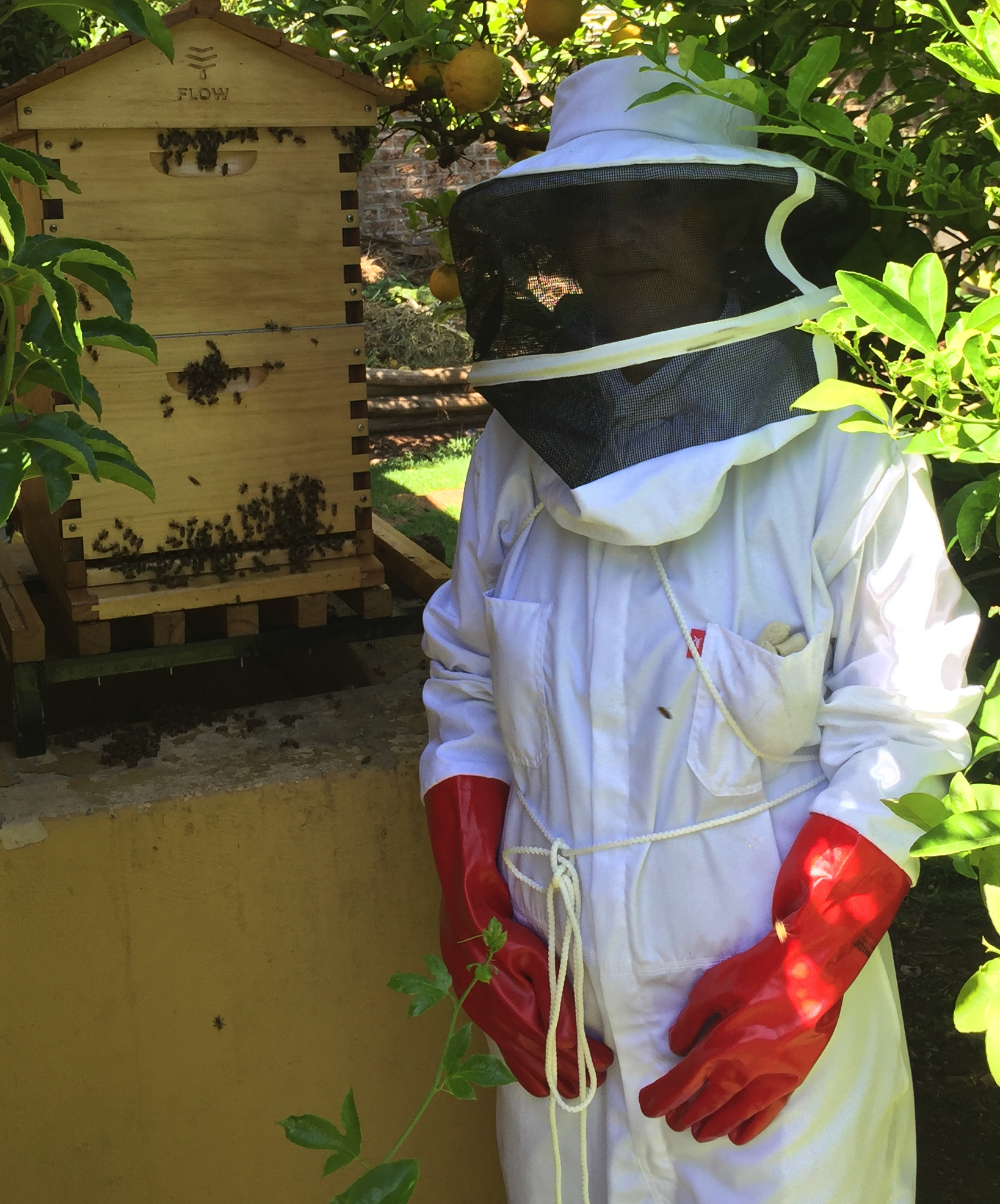
The Flow Hive only changes harvesting. Flow’s own support page says so: “Our invention changes the honey harvesting component of beekeeping, however, all other beekeeping practices remain the same.” You still inspect the brood box for pests and disease, manage swarming, and watch your mite levels. The observation windows help you judge colony strength, but they don’t replace a proper look at the brood.
If you’re curious about what a brood inspection involves, whatever hive you use, my first hive inspection guide walks through it.
Learn more: Flow Hive support, “How often do I need to check the brood?”
The Omlet Beehaus: a plastic hive for city gardens
In 2009, Omlet, the UK company known for its plastic Eglu chicken coop, launched the Beehaus, a molded plastic hive aimed at people keeping bees in gardens and on rooftops.
What was different:
- Double length, lighter boxes. Omlet’s 2009 brochure says the brood box holds 22 frames, twice a standard National hive, with an entrance at each end so you can split it into two colonies. The honey supers are half the size and weight of a normal super, and the hive sits on legs at waist height.
- Plastic, not wood. Omlet says the smooth plastic can be cleaned with common disinfectants like bleach or Virkon.
One catch I’d think about first: plastic changes what happens if you ever get American foulbrood. Delaware’s Department of Agriculture tells beekeepers not to burn plastic hives and to send them to certified deep burial instead. Check your own state’s rules before you buy.
Learn more: Omlet’s original Beehaus brochure (PDF)
What I take from these designs
- Seeing in is different from working in. Glass and windows are great for learning, but healthy colonies still depend on regular hands-on inspections.
- Convenience features mostly move the work around. Flow moves the work of harvesting, and the Beehaus moves the work to waist height. The bees still need the same care.
- Learn on standard gear if you can. Mentors, clubs, and most guides assume a standard Langstroth hive. Start there, and you’ll understand exactly what a fancier design is changing.
Sources
- University of Florida IFAS Extension, “Observation Bee Hives” (ENY131/MG320)
- Smithsonian’s National Zoo, “Bee Creative: National Zoo Seeks Honey Recipes and Honeybee Poetry in Honor of New Colony” (June 27, 2010)
- IP Australia, “The Flow Hive crowdfunding and IP protection” (Dec 2, 2017)
- Flow Hive support, “How often do I need to check the brood?”
- Omlet, Beehaus brochure (2009)
- Delaware Department of Agriculture, “American Foulbrood” fact sheet
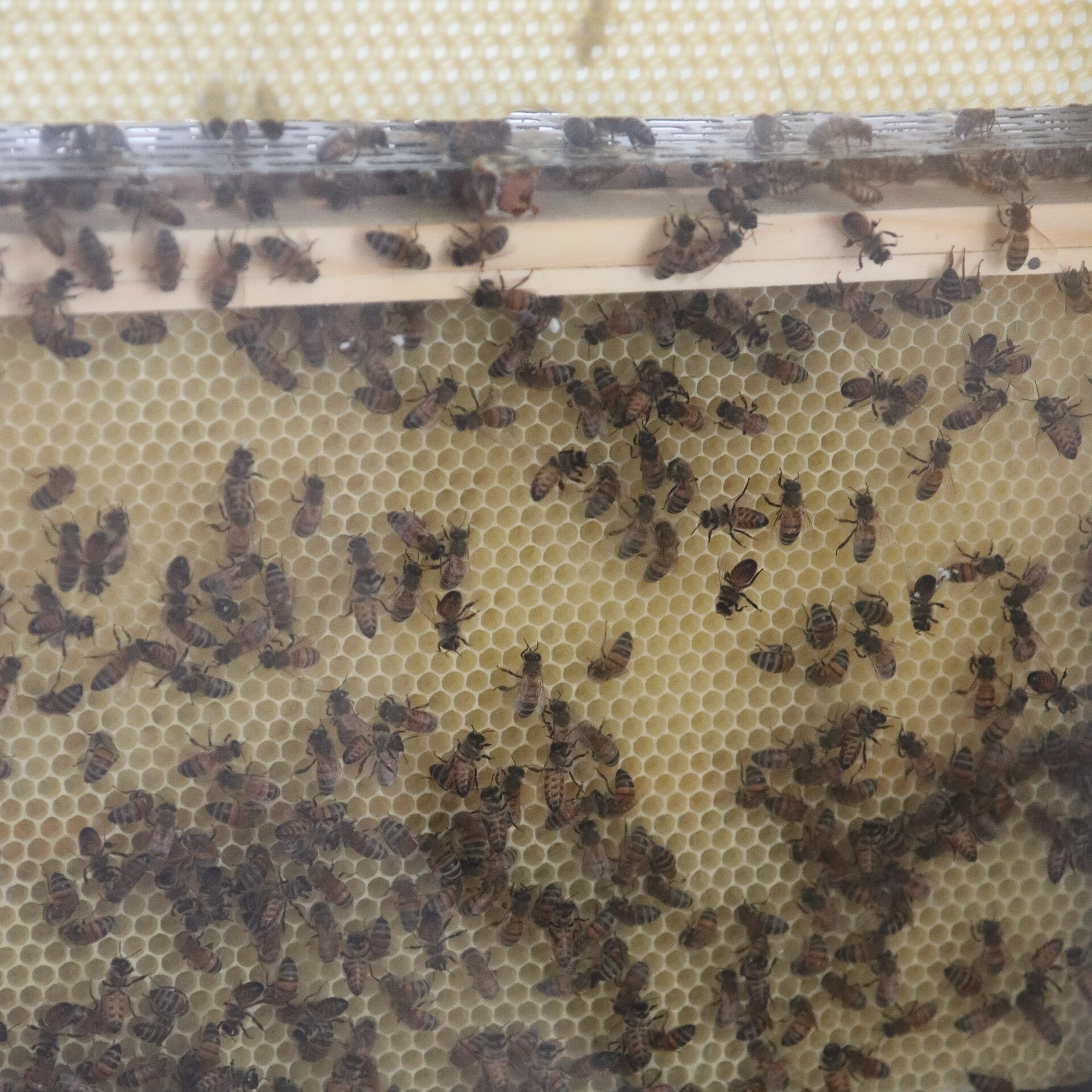
Top photo: a frame of bees behind glass in a display hive. Photo: Tim Sheerman-Chase, CC BY 4.0, via Wikimedia Commons