Can Robots Pollinate Crops? Why Drones Won’t Replace Bees
Every so often a headline says robot bees are coming to save the world’s crops. It’s a fun idea, and some genuinely clever machines have been built. But there’s a big gap between a robot that can pollinate a flower in a test and one that could stand in for the bees doing that job across whole farms.
Below is what has really been built so far, and why most pollination scientists don’t expect robots to take over from bees.
- Harvard’s RoboBee
- The drone that pollinated lilies
- Greenhouse robots
- Why robots can’t replace bees
- My take
The short answer
- Tiny flying robot “bees” exist in labs. Harvard’s RoboBee weighs a tenth of a gram and can fly and land, but it’s still tethered to off-board power and control.
- Drone pollination has been demonstrated, including a 2017 Japanese experiment that pollinated lilies with a gel-coated drone more than a third of the time.
- The robots doing real farm work are in greenhouses, mostly shaking tomato flowers with air, a job greenhouse growers have otherwise used bumblebees or hand tools for.
- Scientists have laid out why robots can’t replace pollinators: they’re nowhere near efficient enough, they’re unlikely to pay off, and leaning on them would put food supplies at risk.
Harvard’s RoboBee: impressive, and still on a leash
The Harvard Microrobotics Laboratory, led by Robert Wood, has worked on the RoboBee for years. In April 2025, the team published an upgrade in Science Robotics: long, jointed legs modeled on the crane fly, plus a new controller that slows the robot as it comes in to land. The robot weighs about a tenth of a gram and has a 3 cm wingspan. Before the upgrade, one researcher said, they would cut power just above the ground “and pray that it will land upright.”
Harvard’s own announcement admits the catch: the RoboBee “stays tethered to off-board control systems.” Full autonomy, with onboard sensors, power, and control, is the long-term goal. Pollination is on the list of possible future uses, along with environmental monitoring and disaster surveillance. It isn’t something the robot can do in a field today.
Learn more: Harvard SEAS, “RoboBee comes in for a landing”
The drone that pollinated lilies
In 2017, chemist Eijiro Miyako and colleagues at Japan’s National Institute of Advanced Industrial Science and Technology (AIST) published a study in the journal Chem. The idea came from a sticky gel Miyako had made years earlier, given up on, and found again during a lab cleanup. He coated animal hairs on the back of a small drone with the gel so it would pick up pollen the way bee hairs do.
In the paper, the drone pollinated Japanese lilies 37% of the time over 100 tries. It brushed against one flower to collect pollen, then flew into another to drop it. That’s a real result. It was also one flower at a time, with a person flying the drone.
Learn more: The 2017 lily-pollinating drone paper in Chem
Greenhouse robots that are actually working
This is where pollination robots look most useful, and it’s easy to see why. Greenhouse tomato flowers need to be shaken to release their pollen. Bumblebees do it naturally by vibrating, and growers otherwise use hand tools. A closed greenhouse is a controlled space, unlike an open orchard.
- Arugga’s Polly+ is a ground robot that uses cameras and computer vision to find tomato flowers that are ready, then hits each one with calibrated air pulses to imitate bumblebee buzz pollination. Arugga says it has been used in commercial greenhouses in Australia, Europe, and America, with one robot covering a hectare. The company reports yields as good as, and sometimes up to 5% higher than, bumblebees. Those are the company’s figures.
- Polybee uses small drones that fly over rows, using the downdraft from their propellers to shake flowers. The company lists tomatoes and strawberries as live crops and says the drones launch, dock, and recharge on their own.
- West Virginia University’s BrambleBee was a USDA-funded research prototype: a wheeled robot with an arm, designed for proof-of-concept pollination of blackberries and raspberries in a greenhouse.
Notice the pattern: tomatoes and berries, indoors, one crop at a time. That’s a long way from pollinating the world.
Learn more: West Virginia University’s precision pollination robot project
Why robots can’t replace bees
In 2018, four bee scientists from the University of Reading, the University of Bern, France’s INRA, and the Université libre de Bruxelles published a short paper titled “Robotic bees for crop pollination: Why drones cannot replace biodiversity.” It came out the same year Walmart filed a patent for autonomous robot bees. They gave six reasons:
- Robots aren’t close to good enough. There are more than 350,000 species of flowering plants, and real pollination depends on how each flower and its pollinators fit together. Moving pollen around is the easy part.
- The economics don’t work. Billions of bees and other pollinators already do the job. Even at a “modest $10 per bee,” the authors estimate, replacing them would cost hundreds of billions of dollars. Protecting the pollinators that already exist is far cheaper.
- The environmental cost would be high, from building, powering, and eventually throwing away huge fleets of machines.
- Wider ecosystems would suffer. The authors call robot fleets a potential “species invasion of epic proportions” that could displace real pollinators, take pollen they need, and still fail to pollinate the wild plants that depend on animals.
- It would erode the value people place on biodiversity.
- It could make food less secure. Machines can break down or be hacked, and the authors note that more than 2 billion people depend on smallholder farms that couldn’t afford robot pollination.
The authors also point out that the big international pollinator assessment by IPBES (2016) found no evidence to treat robotic bees as a credible answer to pollinator loss. To be fair, they don’t rule robots out completely: they say the technology could have a role in a small number of specialist crops, such as hybrid seed production for nectarless crops like tomato.
To get a feel for the scale, California alone had about 1.39 million acres of bearing almond orchards in 2025, that depend on bees trucked in each bloom. No robot fleet is anywhere near that.
Realistically, pollination robots will probably find niches in greenhouses, vertical farms, and plant breeding. Pollination of farms and wild plants will keep depending on honey bees, bumblebees, and thousands of wild bee species. If you want to help, plant flowers, cut back on pesticides, and keep your own colonies healthy.
My take
Robot pollinators are clever engineering, and a few earn their keep in greenhouses. I wouldn’t count on them as a backup plan for bees, though. Mostly, seeing how hard pollination is to copy is a good reminder of how much bees already do.
Sources
- Harvard SEAS, “RoboBee comes in for a landing” (Apr 16, 2025)
- Chan, Hyun et al., “Sticking the landing: Insect-inspired strategies for safely landing flapping-wing aerial microrobots,” Science Robotics (2025)
- Chechetka et al., “Materially Engineered Artificial Pollinators,” Chem (2017)
- Arugga AI Farming, Technology
- Polybee, Product
- West Virginia University, Precision Pollination Robot (Yu Gu)
- Potts, Neumann, Vaissière & Vereecken, “Robotic bees for crop pollination: Why drones cannot replace biodiversity,” Science of the Total Environment (2018), accepted manuscript
- USDA NASS, 2025 California Almond Objective Measurement Report
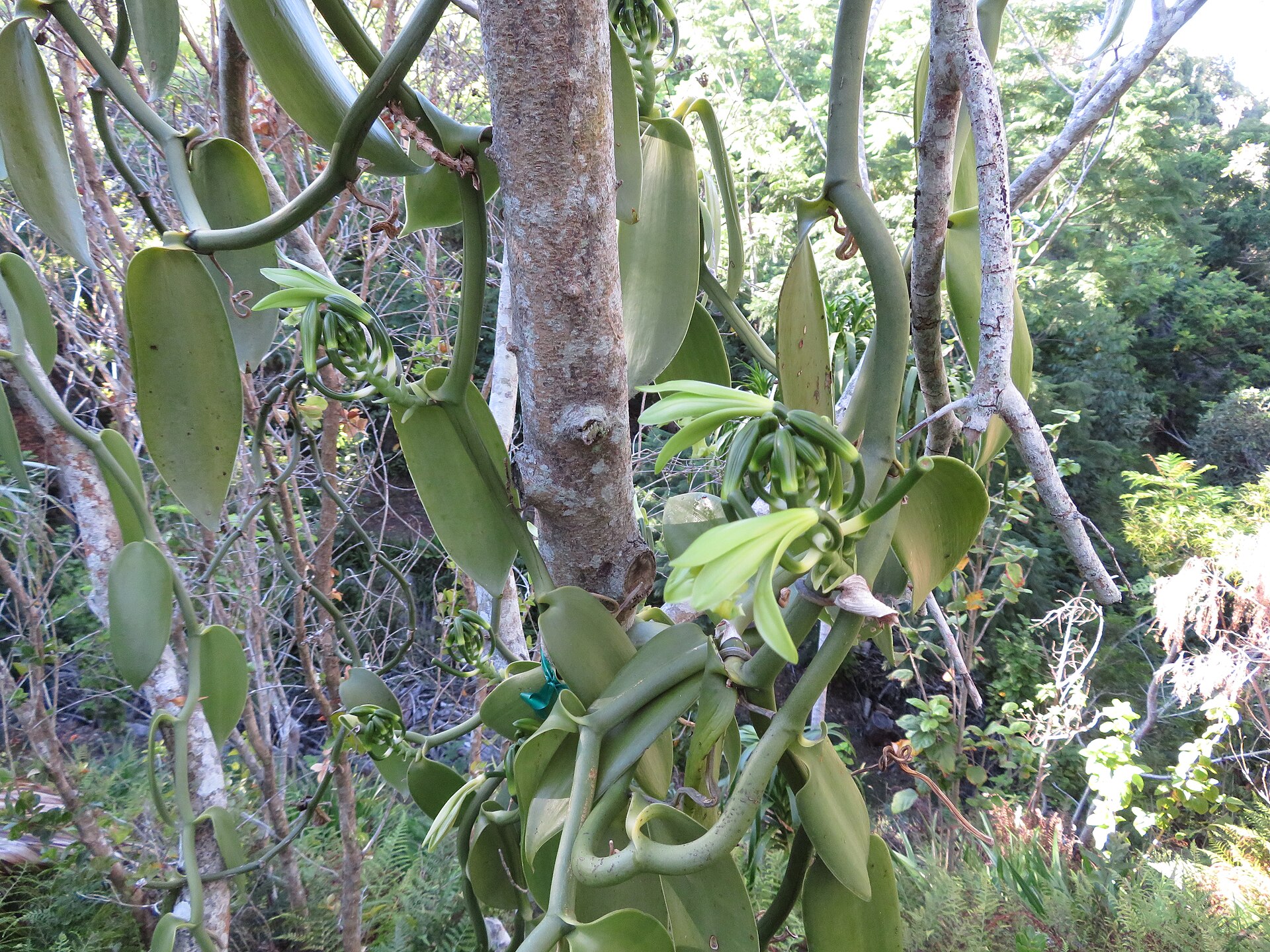
Top photo: hand-pollinated vanilla flowers on Maui. Photo: Forest and Kim Starr, CC BY 2.0, via Wikimedia Commons